Magic has always relied on surprise.
But in today's world, surprise alone is often not enough.
Audiences see visual effects every day:
-
movies
-
video games
-
social media
-
AI-generated content
As a result, modern magicians face an interesting challenge:
How do you make people care about the impossible?
The answer often has less to do with the method and more to do with emotion.
And few emotions are more powerful than nostalgia.
The Psychology of Nostalgia in Magic
When people recognize something from their childhood, something remarkable happens.
Before the trick even starts, they already have an emotional connection to the object.
Instead of seeing a prop, they see a memory.
That emotional investment changes how the audience experiences the magic.
The effect is no longer just:
"How did that happen?"
It becomes:
"I remember that."
And that feeling creates a deeper reaction than surprise alone.
Why Gaming Themes Work So Well
Over the last three decades, video games have become part of mainstream culture.
What was once a niche hobby is now a shared language across generations.
People instantly recognize:
-
power-ups
-
treasure chests
-
mystery boxes
-
collectible items
These objects already carry meaning before the magician touches them.
That gives performers a huge advantage.
The story is already half-written.
Turning a Familiar Object into an Impossible One
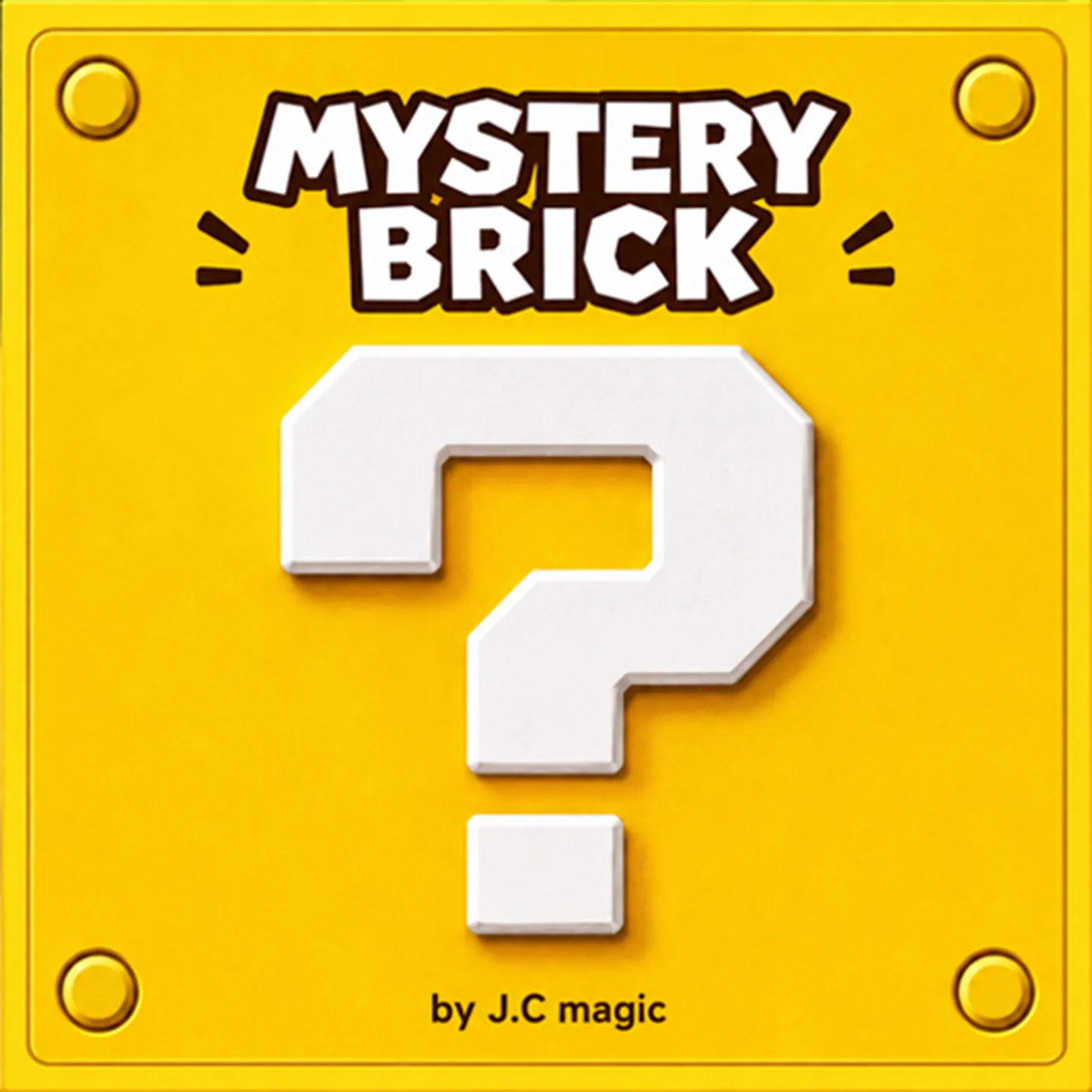
One of the strongest examples of this approach is Mystery Brick by J.C Magic.
Inspired by one of gaming’s most recognizable icons, the effect transforms a simple nostalgic object into an entire performance system.
At first glance, the audience sees a familiar Question Box and a small brick.
Nothing appears extraordinary.
But that simplicity is exactly what makes the routine so deceptive.
A Routine That Grows Instead of Ends
Many magic tricks build toward a single climax.
Mystery Brick takes a different approach.
Each phase creates the feeling that the effect is finished.
Then something even stranger happens.
The brick:
-
vanishes
-
reappears
-
travels
-
returns to the box
-
appears in impossible locations
Every new phase resets the audience's assumptions.
Just when they think they understand the rules, the rules change.
Why Modular Magic Creates Stronger Reactions
A common weakness in magic is predictability.
Once spectators identify a pattern, the mystery starts to fade.
Modular routines solve this problem.
Instead of following a fixed structure, the performer can choose different paths and endings.
This creates a feeling of spontaneity.
The audience never knows when the routine is truly over.
And that's incredibly powerful.
The Importance of False Endings
Professional magicians understand an important principle:
The strongest surprise often happens after the audience believes the trick has finished.
Mystery Brick uses this idea beautifully.
The First Finale
The Question Box is placed on a table.
Then, under seemingly impossible conditions, it penetrates through the tabletop.
For many audiences, this alone feels like a complete ending.
The effect appears finished.
The mystery is solved.
The applause begins.
But then—
The routine continues.
When Magic Becomes Impossible Again
This is where the Ultimate Finale changes the entire experience.
The audience has already accepted the existence of a box.
They understand its role in the routine.
Then the impossible occurs.
The Question Box transforms into a completely solid brick.
No lid.
No opening.
No hidden compartment.
Just a solid object.
Why This Finale Hits So Hard
The transformation succeeds because it destroys the explanation spectators have been building throughout the routine.
Most audiences subconsciously assume:
"The secret must be inside the box."
The solid brick eliminates that possibility instantly.
The explanation disappears.
And with it, the audience's confidence.
Social Media Loves Unexpected Transformations
Effects that work well online typically share three characteristics:
-
recognizable objects
-
visual clarity
-
surprising endings
Mystery Brick naturally checks all three boxes.
The audience immediately understands what they're seeing.
The transformations are visual.
And the final reveal is strong enough to stop scrolling.
In an era where attention is measured in seconds, that matters.
Nostalgia Creates Stronger Memories
One reason themed magic performs so well is because people remember stories better than techniques.
Years later, spectators may not remember:
-
a force
-
a vanish
-
a sleight
But they will remember:
"The magician turned that game box into a solid block."
That image sticks.
And memorable magic is successful magic.
Beyond Tricks: Creating Experiences
Modern audiences don't just want to be fooled.
They want to feel something.
Nostalgia creates:
-
familiarity
-
curiosity
-
emotional connection
Magic creates:
When combined, the result is significantly stronger than either element alone.
Final Thoughts
The future of magic isn't necessarily bigger props or more complicated methods.
Sometimes it's about taking something people already love and making it impossible.
That's why nostalgia-themed magic continues to grow in popularity.
Not because audiences miss the past.
But because familiar objects make impossible moments feel more personal.
And when magic becomes personal, it becomes unforgettable.
FAQ
Q1: Why do nostalgia-themed magic tricks get stronger reactions?
Familiar objects create emotional connections before the magic even begins, making the effect more memorable and impactful.
Q2: What is modular magic?
Modular magic allows performers to customize routines with multiple phases, endings, and presentations rather than following a fixed sequence.
Q3: Are gaming-themed magic props suitable for adults?
Yes. Many gaming-inspired effects appeal strongly to adult audiences because they connect with childhood memories and popular culture.
Q4: What makes a strong magic finale?
A strong finale removes possible explanations and creates a final surprise after the audience believes the routine has already ended.
Q5: Is Mystery Brick suitable for social media magic?
Absolutely. Its recognizable theme, visual transformations, and unexpected ending make it ideal for TikTok, Instagram Reels, YouTube Shorts, and live performances.